Comment

Métis fiddler Jimmie LaRocque of Turtle Mountain

Back in the 1990s, as production associate for the Folk Masters concert and radio series, I had the honor and pleasure of meeting Jimmie LaRocque, a Métis fiddle player from the Turtle Mountain Reservation in North Dakota.

I will never forget this remarkably energetic, enthusiastic sixty-something year-old man who drove the entire way from his home near Belcourt, North Dakota (practically on the Canadian border) to Washington, DC (a distance of almost 1600 miles!) and arrived none the worse for wear.

As a young person, Mr. LaRocque absorbed many influences and, like so many musicians, was eager to play the popular music of the day. By age 17 he was in Texas, playing with a band called The Western Kings out of Corpus Christi. Later, he lived in California and played backup fiddle for touring country bands including Grand Ol' Opry performers Kitty Wells, Ray Price and Ernest Tubb.

But he never forgot the traditional tunes that he taught himself to play on his dad's fiddle as a boy. He is quoted in the 1994 Folk Masters program book:

The Indian old-time fiddle music is a lot different. It seems like it's got a lot more meaning. In my mind sometimes I play fiddle here, and I swear to God I close my eyes a little bit and I can see my dad sit there by me with his fiddle. You play this Indian music and then it's like the whole sky, it's like a great big movie camera is showing a big picture on there. On the sky you can see Indians coming on spotted horses and you can see the wind blow.

Mr. LaRocque passed away in 2009.

This link will take you to a short sample of Mr. LaRocque playing the Métis fiddle tune "Road to Batoche" on the Smithsonian Folkways recording Wood That Sings. Batoche (the Smithsonian Folkways listing misspells the name) was a Métis settlement in Saskatchewan and the headquarters of their fight against Canadian forces in 1885. Métis people sometimes call that resistance la guerre nationale "the national war," (i.e., the war of the Métis nation), which gives you a sense of its importance to them as a people.

Batoche is now a Parks Canada National Historic site, as well as the home of "Back to Batoche," the Métis nation's annual commemoration of its culture, traditions and heritage.
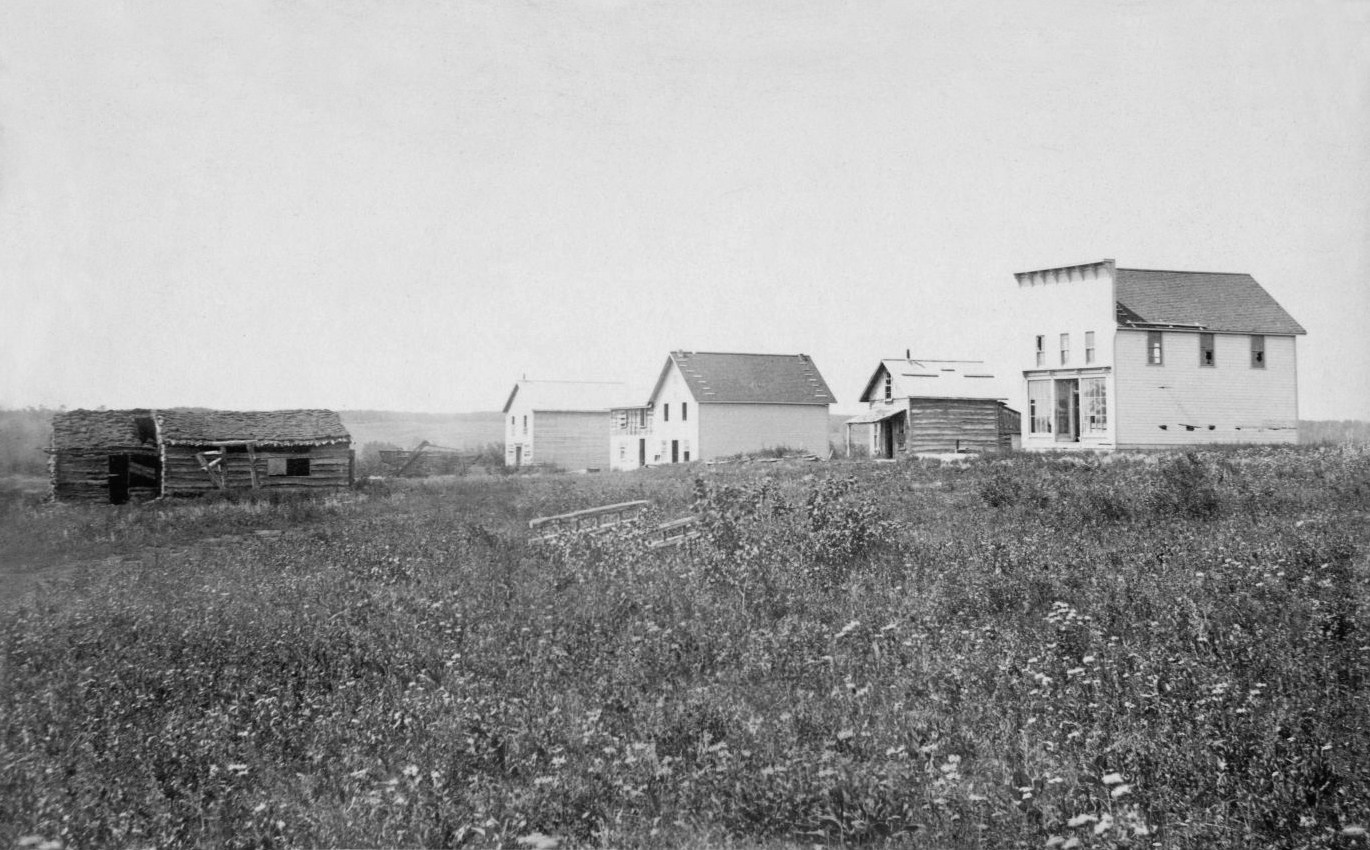
Batoche in 1885. Unknown photographer. This image is available from Bibliothèque et Archives nationales du Québec under the reference number P600,S6,D5,P1309. Public Domain, https://commons.wikimedia.org/w/index.php?curid=44641160

Batoche in 1885. Unknown photographer. This image is available from Bibliothèque et Archives nationales du Québec under the reference number P600,S6,D5,P1309. Public Domain, https://commons.wikimedia.org/w/index.php?curid=44641160
Comment

Comment

Book Review: Killing Frank McGee by Don Reddick

Frank McGee was a Canadian hockey star during the early years of the 20th century, and, according to the cover copy of this book, “the only legitimate Hall of Fame athlete of any sport to be killed in action fighting for his country.” Killing Frank McGee is a fictionalized account of McGee's near-miraculous prowess as a hockey star (he was blind in one eye and only 5' 6" yet scored prolifically), and his considerably less extraordinary death in the trenches of France during World War I.

Interestingly, Reddick chooses to tell McGee’s story not through the athlete’s own thoughts or words, but rather through those of the novel's two narrators, Alf Smith and Billy Kinnear. The result is an unusual sort of character sketch in which the context and surroundings are clearly pictured, but the man at the center remains a bit of a mystery.

Those surroundings, though, are dense and vividly described. On the home front, we’re treated to a startling close-up of Smith, an Ottawa Hockey Club coach and player-coach whose disdain for the privileged classes (including the McGee family of which his teammate Frank is a member) is matched only by his single-minded determination to win the Stanley Cup. Through Smith’s opinionated musings, the era’s economic, social and class terrain, as well as the hockey culture of the time, come to life.

If Alf Smith shows us the Canada that created Frank McGee, Billy Kinnear, a young, sensitive, working-class man from rural New Brunswick, brings us the war that kills him. Through Kinnear, Reddick renders not only the blood, mud, stench and deafening thunder of trench warfare, but also the humanity of the soldiers who cling not so much to life, which they cannot hope to grasp, as to spirit.

Up to the moment of his death and beyond, McGee remains that mystery, that blank slate upon which we, or Kinnear, or any of his other fans and followers may draw what they will. An unusual way to portray your protagonist, perhaps, but isn't it rather in keeping with the way the rest of us "mere mortals" tend to view our star athletes and war heroes?

Comment

Comment

Girl literary role models: Before Hermione, there were Harriet and Claudia

Seen at Posman Books in Chelsea Market, Manhattan: a display of New York-related books, including Harriet the Spy (1964) and From the Mixed-up Files of Mrs. Basil E. Frankweiler (1967).

These two classics were favorites of mine when I was a girl. Their unapologetically smart, poised, self-assured heroines Harriet M. Welsch and Claudia Kincaid, respectively, were, decades before the appearance of Hermione Granger (1997), among the few girl literary role models in existence--among the few that I deemed worthy, in any case! 

Seeing these books on the shelf was like running into old friends. Never mind the afternoon's unexpected, heavy rain shower--I had a warm glow for the rest of the day.

Comment

Comment

Wanted: pond hockey woman

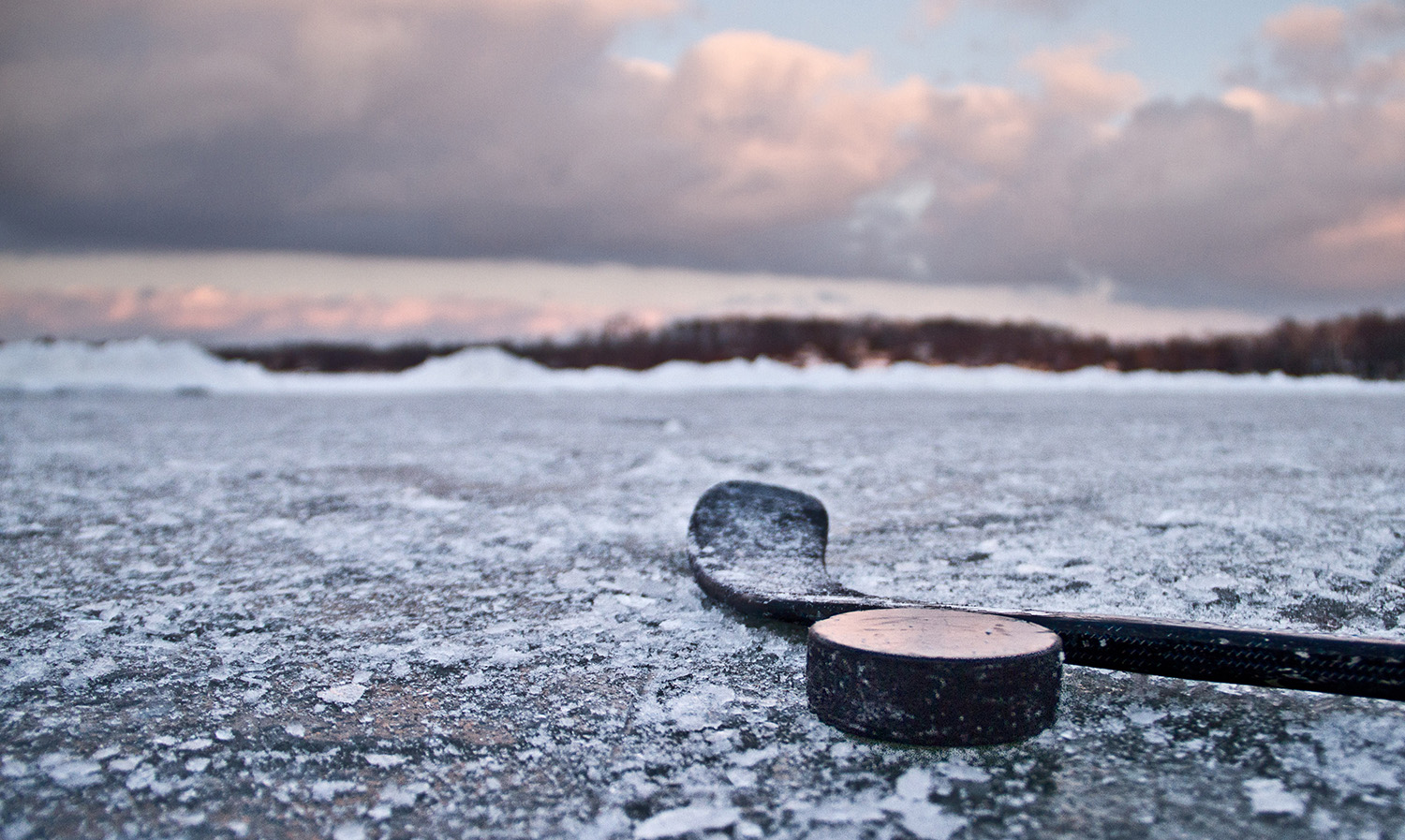
Don't you love the cover of Seeking the Center? I do. It's got so much texture, with close-up intensity but also a sense of distance that pulls you in. The dark ice bristles with cold but the rosy clouds give a hint of romance, which is appropriate to the story. And it's open-ended, leaving us free to imagine.

"Pond Hockey" © Mike Wilkinson

"Pond Hockey" © Mike Wilkinson

I'm very happy with it. But it wasn't what I initially envisioned for the cover of Seeking the Center. What I wanted was Agnes in her element, dangling a puck on some frozen pond, showing off some flashy hockey moves. I wanted to see a woman, not playing a structured game in full gear, but, rather, just having some fun, outside, maybe by herself, or maybe with a friend or two. It didn't seem like too much to ask, honestly -- especially considering that the internet is absolutely overflowing with pictures of men doing these things. 

But as it turns out, pictures of pond hockey women are nearly non-existent. Don't get me wrong, I found quite a few photos of women playing in pond hockey competitions, and in college or prep school games, but that's not what Seeking is about. I came across photos of younger girls playing with their dads or siblings, and to be fair, an occasional shot of a casual female pond hockey skater over the age of 12, but there was always some issue with it -- for example, giant snow-capped mountains in the background. (Uh, in Saskatchewan? I don't think so.) Or, the woman was old enough to be Agnes's kookum. Or, she's wearing figure skates. And there were so very few of these images to choose from!

Trust me: I spent hours and hours searching on every keyword and combination of keywords I could think of. If I'd have been looking for an image of a guy I would have had dozens to choose from. But in the end I came up with nothing.

What's up with this? Do women not skate in the great outdoors? Do they just not bring their cameras when they do? Does anyone have any thoughts on this?

Comment

Comment

Attention hockey players!

Is it the use of multiple font styles and effects -- bold, all caps, underline, italics -- all in one brief message? Or is it the patient precision: do change inside; don't change outside? I'm not sure. But whatever it is, this sign, posted in a local rink, always makes me chuckle.

Clearly, trying to communicate with those dang hockey players over the years has been exasperating. We've had it up to here.

Comment

Comment

Reunion on ice

This morning I skated for the first time in way too long.

I'm a bit of a fanatic about ice skating, so when my rink closed down for three straight weeks recently--during the dog days of summer, no less, when I especially crave this "cool" exercise experience--I was crushed.

There's a bunch of us who skate early, before work. We have an unspoken pact: No matter how many times we fall, or how goofy we look trying to perfect that mohawk, we don't laugh at each other. We do laugh with each other, though, and I missed that just as much as I missed the ice.

It was fun to finally see them all again. To feel the cool air on my sweaty face and the cold, hard ice under my--well, it's like my old skating buddy Hank used to say: "Be careful out there. The ice is slippery today." 

Winter's just around the corner...! Yay!


Comment